How Did JTeles Become Rust's Number One Farmer in a Single Wipe?
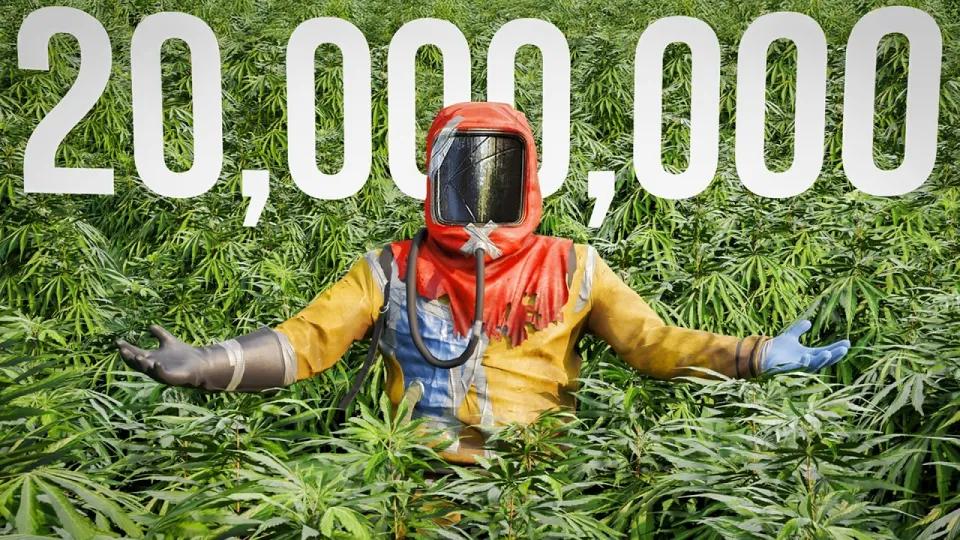
Video: I Became Rust's #1 Farmer...
Need articles like this for your video? They help promote it on YouTube and Google — order them in the Telegram bot @sat_sit_bot. It writes articles around your video, embeds the video and publishes them on popular niche websites (no ads). Free trial — 50 articles.
· based on the channel JTeles
Rust's number one farmer in this run was JTeles, who started a wipe with 126,000 cloth and set out to reach 20,000,000 cloth within seven days on a single server. He did it by inviting viewers onto the server, building what he describes as the biggest cloth farm in Rust, and defending it against a large rival clan that tried to shut the operation down. The attempt is documented in the video breakdown below; anyone curious about the sponsored link used in the run can grab the War Thunder sign-up bonus.
What was the goal of the Rust farming challenge?
The goal was simple to state and brutal to execute: turn a starting stock of 126,000 cloth into 20,000,000 cloth before the wipe ended, a roughly 158-fold increase in seven days. Cloth in Rust is not a glamorous resource. It comes from hemp plants, it feeds into rope, low-grade fuel and clothing, and it is usually gathered in small batches while players are doing something else. Scaling it to eight figures means treating hemp like an industrial input rather than a roadside pickup.
That framing explains why the run was billed as a race to be Rust's number one farmer. The challenge was not about winning a gunfight or holding a monument; it was about throughput, uptime and logistics. Every hour offline was an hour of growth lost, and every raid that landed on the farm set the count back.
How the biggest cloth farm in Rust was built
Building the farm required three things working at once: land, labor and protection. JTeles opened the server to viewers, which turned a solo grind into a crew project. The helpers did not just plant and harvest; they ran the base, kept furnaces and crafting going, and covered the compound while the main account was offline.
Key pieces of the operation:
- A dedicated growing compound. Hemp planters, water and lighting were concentrated so harvesting could be done in loops instead of cross-map trips.
- Viewer labor. Invited players handled planting, harvesting and hauling, which is the only realistic way to hit millions of cloth in a wipe.
- Defensive layering. Walls, turrets and internal compartmentalization were needed because a farm that size is visible from space on the map and impossible to hide.
- Crafting on site. Converting raw cloth into rope and other products near the planters cut travel time and kept the stockpile growing.
The compound eventually grew so large and dense that rendering it in one view caused noticeable server lag, a detail viewers picked up on immediately. That is a useful benchmark: when your base is heavy enough to stress the server, the farm has become an industrial site.
Why a rival clan tried to stop the run
A farm on this scale changes the server's economy, and other groups notice. According to the video description, a large Russian clan found out what was being attempted and did everything it could to stop the farm from being finished. The result was a running fight that mixed open-world PvP, raids, base defense, alliances and straight farming under pressure.
This is the part of Rust that punishes ambition. A small hemp patch is ignored; a compound producing millions of cloth becomes a target worth organizing a clan around. The defense therefore had to work without the owner present, which puts the emphasis on design rather than aim. Helpers who held the base during offline hours were, by the account in the video, the reason the run survived.
What the cloth numbers actually mean
Twenty million cloth is an abstract figure until it is converted into the things players use. Cloth is the base material for rope, which in turn feeds into low-grade fuel and a long list of crafting recipes, and it is also consumed directly for clothing and medical items. A stockpile of that size is less a personal stash and more a server-wide supply depot.
For comparison, a player who casually picks hemp while traveling might bank a few thousand cloth in a session. Reaching 20,000,000 requires thousands of individual harvest cycles, which is why the challenge was framed around seven days of near-constant uptime rather than a single marathon session. It also explains why the operation needed multiple people: no single player can plant, harvest, haul, craft and defend at the same time.
Common questions from viewers about the run
Viewers who watched the challenge raised a few recurring points worth addressing directly.
- Was the farm really the biggest? The claim rests on scale rather than an official leaderboard: a single compound producing millions of cloth in one wipe is far beyond normal base farming, and the server lag it caused is the strongest evidence of its size.
- How much did the helpers matter? Enormously. Defense during offline hours and continuous harvesting are the two jobs that decide whether a cloth goal is met, and both were handled by invited players.
- Was it just farming? No. The clan interference turned the second half of the run into a defense and PvP scenario, with raids and alliances shaping how much cloth survived.
- Is this repeatable solo? In practice, no. The math of 126,000 to 20,000,000 in seven days assumes round-the-clock labor that a single account cannot provide.
All links from the video
- War Thunder free sign-up for PC and consoles: https://wtplay.link/jteles
- War Thunder mobile: https://wtm.game/jteles
- JTeles Discord community: https://discord.gg/jteles
- Twitter/X: https://twitter.com/xJTeles
- TikTok: https://www.tiktok.com/@xjteles
Final thoughts on Rust's cloth farming record attempt
The run is a good illustration of what separates a farming challenge from ordinary base building: a clear numeric target, a fixed time window and a server full of players who can interfere. JTeles set the bar at 20,000,000 cloth from a 126,000 starting stock, leaned on viewers to build and hold the biggest cloth farm he could assemble, and spent much of the wipe fighting a clan that wanted the project dead. The compound's size, down to the server lag it produced, is the detail that makes the scale believable. The full breakdown of how it played out is on the JTeles channel, and the sponsored offer from the video is still available through the War Thunder registration link.
Key takeaways
- JTeles started the wipe with 126,000 cloth and set a target of 20,000,000 cloth in 7 days.
- Viewers were invited onto the server to help build and defend the farm.
- The farm grew large enough to lag the server when rendered in full.
- A large Russian clan learned of the attempt and tried to stop it with PvP, raids and base defense.
- The run combined farming, alliances, offline defense and open-world PvP on one server.
Questions & answers
How much cloth did JTeles need to become Rust's number one farmer?
The target was 20,000,000 cloth within a single seven-day wipe, starting from 126,000 cloth already banked. That is roughly a 158-fold increase, which is why the farm had to run almost continuously with help from invited viewers.
Can you build a cloth farm this big as a solo player?
Realistically no. Hitting eight figures of cloth in one wipe requires planting, harvesting, hauling and crafting around the clock, plus someone defending the base while the owner sleeps. The run relied on a crew of viewers covering those shifts.
Why did a clan attack the farm?
A compound producing millions of cloth is a visible, high-value target that can shift a server's economy. According to the video, a large Russian clan learned about the attempt and organized raids, PvP and pressure to stop the farm from being completed.
What is cloth used for in Rust?
Cloth comes from hemp and is refined into rope, which feeds low-grade fuel and many crafting recipes, and it is also used directly for clothing and medical items. A stockpile of twenty million is effectively a server-wide supply rather than a personal stash.
Source: I Became Rust's #1 Farmer... · Markdown version